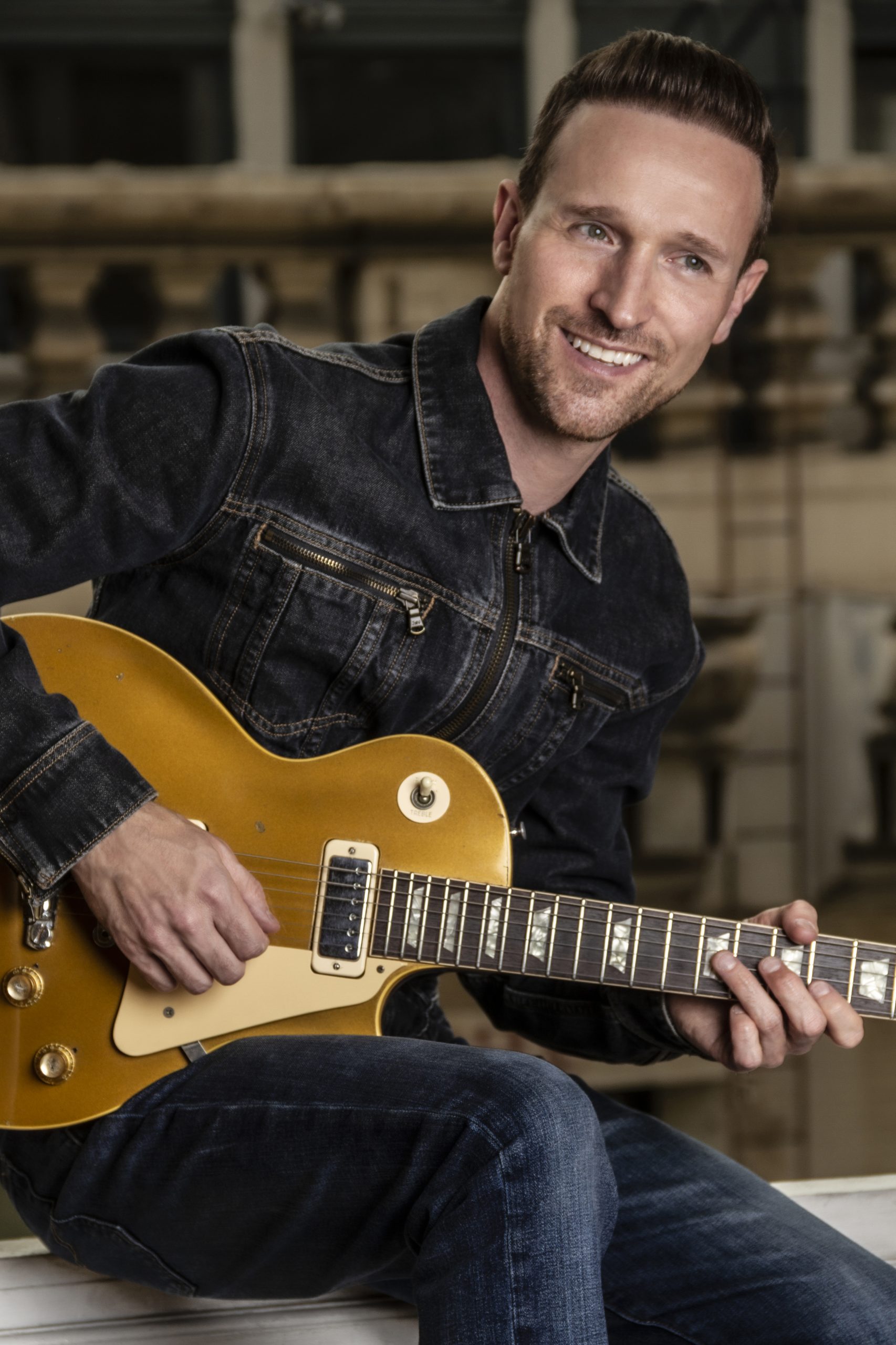
It’s Friday, and it’s 6pm – at least it is where I am, in
Britain. But JW-Jones is in Ottawa, five
hours behind me, when I make the pre-arranged call to catch up with him ahead
of his upcoming British tour, which kicks off on 23 November at Worthing Pavilion. He’s not long back home after six weeks of
touring in Canada and the States, but luckily he’s got his time zones straight,
and is ready to chat about his latest album, about the recording process, about
songwriting, guitar playing, and – well, actually, he seems happy to chat away
amiably about anything.
Your new album High Temperature (reviewed here)
was produced by Colin Linden, a Canadian like you who’s won Juno Awards, but
who is based in Nashville. What did he particularly bring to the
recording of the album?
Well, the whole thing with Colin was getting a real organic
approach to it, and an organic sound. So
one thing that was interesting about his process was that he just wanted to go
in the room, and just start playing the tunes and kind of see how they developed
from there. So there were no rehearsals
or anything like that, we just had a general outline for each tune, and just
went in and started playing, and the way it happened is the way it happened. One of the great things about working with
him is that he had the right team in there, and aside from that he also pushed
me in different directions with the vocals, and trying out different melodies
that I wasn’t familiar with, and I thought all that was really, really great.
 |
| JW-Jones - "Reach for the sky!" |
You recorded the album in Nashville, and sometimes when I hear about
people writing and recording in Nashville, the end result – sometimes – can be
a bit middle of the road, a bit generic.
But you’ve certainly managed to avoid that - the songs on the album are
quite varied in style. Is that something
you were deliberately aiming for?
You know, when I was writing the record the whole goal for
me was just to have a really great collection of songs, and not think too much
about how many shuffles were on the record, or if every song sounded like, you
know, 1955 Chess Records blues. And just
to concentrate on writing songs the way they came out, and that’s why it has a
few different flavours in there. But I
think what ties it all together is that it’s all roots music, and, you know, my
voice and my guitar playing, so I feel like that’s what, kind of, is the glue
to the whole project, plus the band is the same on almost every track too. So, yeah, I’d say the goal was just to have a
great collection of songs, and because they came out sounding a little
different than typical blues records, then I think that’s a good thing.
Were you writing with different co-writers on the album?
All of the songs that I contributed to this record were
co-written with Dick Cooper of the Cooper Brothers, here in Ottawa. They had a great touring career in the
Seventies, and Dick Cooper is really an incredibly great songwriter. So I had a lot of these ideas, and some lines
and some choruses down, and we got together and he brought the magic to the
table, I guess you could say!
The album actually reminds me a little bit of Robben Ford’s album from
a couple of years ago, Into The Sun,
with that variety in the songwriting. In
fact just before I phoned I dug out a magazine interview with him, where he
talked about wanting people to step up to the challenge of songwriting as a
craft, and go beyond writing in simple categories like blues or country. What’s your approach to it?
Well, I haven’t heard his particular record, but now that
you mention it I should definitely go and find it. But I think it’s true that, you know, it’s
how you say it, and it’s also – to me it’s a bunch of different things. There’s the subject matter, because there are
only so many ways you can say “my baby left me”, you know? So you have to find a different way around,
you have to find a way that’s – you know, why
would she leave you? Or what happened to
her, how can you be blamed for that? You know, take a different approach
instead of just pointing the finger. One
of the songs on the record, ‘Same Mistakes’, what I thought was really cool and
different about that song is that I was saying “She makes the same mistakes,
over and over, and I know ‘cause I’m one of them” – I’m one of the mistakes.
Yeah, it’s a great line . . .
I truly felt that, and that song is a true story, that’s
absolutely from the heart. But what I do
is I collect different ideas from lyrics, and subject matter, and song lines
and things like that on one side. And
then on the other side I’m always collecting different chord changes, and
melodic ideas, and riffs and things like that.
And then I sit down every so often and try to marry them up, and say,
you know, what guitar vibe is going to work best with this subject
 |
| JW gets his twang |
matter, and what
chord changes are going to work best?
And then I put them together, rather than waking up one day and just
writing an entire song all from scratch.
This is a bit of a playful question really. There are country tinges to some of the
songs, like ‘Away Too Long’ and ‘Leave Me Out’.
I was reminded of a song by Shemekia Copeland on which she sings
“Country music’s just the blues with a twang.”
What’s your take on that?
[Laughs]
Absolutely! I mean, I’ve heard
Jimmie Vaughan say that too, you know.
He said country, blues, rock’n’roll – it’s all the same thing. It really, really is the same thing. It’s just, how hard are you hitting the
drums, how aggressive are you being with the vocal and the guitar – I mean, you
listen to some Western Swing and then some Bebop, and it’s virtually the same
thing. But yeah, the twang thing is
interesting too, because that wasn’t really on purpose. And that’s kind of the direction that a lot
of people are talking about with this record, they’re saying “Oh, this album’s
got some country twang to it.” That could
well be that I’m into country, and even some of the new country stuff, and it
just came out that way. But you
mentioned ‘Away Too Long’, and that to me is a blues shuffle, and it just so
happens that it’s got a certain bit of twang to the harmonies with the vocals,
and I think that makes it feel a little bit differently.
The song ‘Who I Am’ is a very meaningful story of growing up in
challenging circumstances. Was that
autobiographical to some degree?
It’s one hundred per cent autobiographical. On the last record, Belmont Boulevard, we had Tom Hambridge producing it, and what Tom
did for me on that record was he said, “I want you to dig deeper on the
songwriting. I want you to talk about
where you come from.” And no other
producer had ever said that to me in those words. So that in itself challenged me, and I ended
up telling him a bit about my story growing up, and he said “Man, we have to
write about this. So we’re going to do
that together in the studio.” And then
when I got down there we did it, and man, some of those lines in ‘Cocaine Boy’
made me feel very uncomfortable at first, because they were so real, and so
raw. And I thought, I don’t want people
to know how my parents were when I was growing up, and things like that,
because I thought it might affect my career negatively. So I’d been trying to put that aside for so
long, that when he influenced me to do that song it made me feel liberated, and
it changed everything. And when that
song came out, and people were responding to it, I thought, “Man, this is
great.” So on this record, you mentioned
the song ‘Who I Am’, it’s a bit of a continuation of the same trend of saying,
“Where did I really come from?” You
know, people get some pretty crazy ideas when they see me in a suit and tie,
playing a Fender guitar, they think I came from money or something like that,
when it couldn’t be farther from the truth.
So writing a song like that is liberating, and it was special, and I
feel good about it now. And I’m happy
about where I am, and I can tell my story.
On the other hand ‘Where Do You Think I Was’ is a really ironic and
funny tale of how glamorous people think the life of a touring musician must
be. Was that inspired by a particular
individual’s notions of what you get up to, or is it a perception you come
across more widely from non-musicians?
Well actually, to be honest, that’s more directed at my
ex-girlfriend! [laughs] There were a few
instances where she was kind of accusing me, saying “Why didn’t you call me
before you went to sleep?” Or, “What
happened between this hour and this hour?
You disappeared.” And I used to
say, “Where do you think I was?” And then I came up with all these ridiculous
ideas about where do you think I actually was, and then made that song just
kind of a tongue in cheek story about all the possibilities. And we made a music video for that in Las
Vegas as well, which was pretty fun, so you should check that out on YouTube.
The guitar work on the album is varied too – you dash off solos in a
range of styles, while always retaining your own sound. And I was just reading some of your bio
earlier on, and you’ve worked with some big names in the past – Howlin’ Wolf’s
guitarist Hubert Sumlin, for example, on your album Midnight Memphis Sun. Who
are
 |
| JW-Jones and some random guy - oh, wait . . . |
your influences when it comes to guitar?
Well, you mentioned Hubert, he’s definitely one of the big
influences. But I’d say my list is
probably like many you’ve heard, you know - BB King, T-Bone Walker, Albert
Collins, Freddie King, Albert King. A
big one for me are some of the younger generation compared to those guys, like
Jimmie Vaughan, and Anson Funderburgh, Little Charlie Baty, Junior Watson, Rick
Holmstrom. I mean all of these guys
bring different sounds. I mean, you
think about the difference between Little Charlie and Anson Funderburgh, or the difference between
Junior Watson and someone like Rick Holmstrom, they all sound completely
different, and have totally different styles, and I drew from all of them, in
different ways, and for different reasons.
But I love them all so much, and I just wouldn’t be the player that I am
today without having studied all of those guys.
It’s interesting you talking about the variations in style between
quite a few people, because the blues is often described as quite a simple
framework – that might be part of its charm I suppose. But it’s also quite narrow, in a sense. What do you do to try and explore ways of
keeping your playing fresh?
Well, whenever I think about blues guitar – I teach blues
guitar at home, when I’m not out on tour – one of the things I always come back
to is: learn the rules – meaning, study the masters - and then break them. Meaning, if
you want to start adding effects, and playing faster, and listening to guys like
Joe Bonamassa, that’s great, but you’ve got to learn where all this came from
to begin with. Because if you do that,
that itself is a lifelong process. You
will never get through all of Lightning Hopkins, Eddie Taylor, and then all the
Kings and all those guys – you’ll just never get through it. So if you keep listening, and you keep
picking up on the little tiny subtleties then you’ll realise how your playing can immediately sound
different from what’s already out there.
And that’s something that’s really important to me, is that people
recognise what I’m doing is coming from a deeper source, and it’s not just
learning scales and running through them like so many blues rock players do
these days.
You worked with quite a few session musicians on this album. Did they bring
 |
| "Hang on - are we recording this?" |
anything in particular to the
approach? You talked about the way that
you approached it with Colin Linden was “Let’s just play the songs”. So had you even met these guys before you
went in the studio?
No, we met that day. [Laughs] That’s the kind of crazy thing about
Nashville, and going down there, is that they’re hired guns, right? They’re there to play, and as soon as they
arrive the producer generally hands out some framework for each song, and it’s
written in what they call the ‘Nashville number system’ – so that’s where you
get the terms ‘one – four – five’ and stuff like that. So everyone’s got their forms, and then Colin
will pick up an acoustic guitar, and just strum through it and say, “So we’re
going for this,” and you can try this and you can try that. But for the most part we just went in and sat
down, and started playing. And you know,
one of the funny things about doing it that way is, on the opening track ‘Price
You Pay’, what you’re hearing there, the very first thing you hear on the
album, is – we all just start playing, and I didn’t even have my guitar picked
up yet. So Colin plays that first little
riff with his guitar, and then all of a sudden the piano comes in and does a
little tinkle thing, then all of a sudden there’s a shaker, and then you hear
the bass does a riff, and then I play a riff on the lead guitar, and then Colin
just keeps playing the rhythm – and I didn’t even know we were recording yet! I literally thought, “Okay, this is the run
through,” and then as they kept going and didn’t stop, I looked around and I
realised, “I’m the only one here that doesn’t know we’re recording – I guess
I’d better start paying attention!”
[Laughs] And that became the
final take - it was incredible.
So, really organic, and they’re presumably hearing this from their own
perspective. Does that trigger the
development of the song, or is it really just a couple of takes and bang?
Well, there was no time to develop the songs. I don’t mean that we didn’t have time to do
it, I just mean that we didn’t need the time.
Because like you say, each player comes with their own approach, and
then when they start playing then they’re bringing what they instinctually feel
is the best thing to do. So, they’re in
that room for a reason, and they’re in that room because someone trusts them
and because they’re great. And there’s
nothing that any of those guys did where I thought, “Er, I don’t know about
that, we’d better re-do that”, or change the approach completely. Just everything they did was just the right
thing to do at the time. It was a
beautiful thing – I loved working in that way.
I did have my touring band on three of the songs as well, so that
brought a different energy to ‘Wham’, ‘High Temperature’, and ‘Midnight Blues’
– that was my touring band, with Laura Greenberg on bass, and they sounded
great because we play those songs every night.
As you say, you tour as a trio.
How much of a challenge is it to adapt the songs for a trio format?
Well that’s a really great question, because they’re never
going to sound as large as they do on
the record. So whatever they lack in
terms of instrumentation, in terms of having a Hammond organ, and a piano and a
rhythm guitar, and all that good stuff, we just have to make up for in
enthusiasm and energy! So what happens a
lot of the time is the songs end
 |
| JW-Jones and band get cheesy |
up being a few beats per minute faster,
because we need to fill in a bit more space, you know. But we also take comfort in the differences,
so I think it’s a cool thing, and people love them live from what we can
gather, so that’s a good thing – and it sure saves to not have to have a five
or six piece band on tour.
You’ve got 18 dates coming up in Britain, and I think you’ve only got
one day off. Is that a tough schedule,
or is the travel less of a challenge than touring in Canada and the States?
Well, I try to book things that way anywhere I go, because
my theory is that there will always be off nights, so if you approach the
booking like you don’t want any off nights then it’s still going to happen
anyway. So you just take the holes where
you get them, and that’s the end of it.
But with this UK tour - you know it’s so expensive being on tour, and
I’m personally investing an absolute ton of money to do this tour, with
publicity, and renting venues, and the vehicle, and you know, all the
accommodation and stuff – that I’m really taking a bigger risk on this tour
than I ever have in my entire career, in any market. So my goal is just to get over there, work
hard, play every single night, sell as many tickets well in advance as
possible, and get the word out as much as possible. And it turns out that that day off you
mentioned has been filled now, at the Cock Inn in Leek, on December the 4th,
and that’ll be on the updated tour poster soon.
And yeah, we just look forward to working hard and trying to develop a
name there, because if this tour goes well we can keep coming back, and if this
tour does not go well then it’s going to make it pretty much impossible to try
to keep coming back there.
Last question. What does the JW
stand for – or is it a closely guarded secret?
[Laughs] It’s fairly
closely guarded – no, I’m just kidding!
My full name is Josh Wynne-Jones – a nice Welsh name there for you. But everyone calls me JW, and that’s just
been the way it’s gone for the last couple of decades or so.
So now you know, folks, why his album covers say JW-Jones –
he’s a hyphenated Welsh Canadian. So you
could say JW’s coming home with his forthcoming tour. It’s not the first venture he’s made to these
shores, and hopefully it won’t be the last.
Get out there and see him rip it up with his brand of blues, complete
with rootsy, adventurous guitar playing.
You can find full details of JW-Jones' UK tour here.