Showing posts with label Joe Bonamassa. Show all posts

Tuesday, December 31, 2024

Goodbye, Farewell, and Amen - The Blues And Beyond

Blues Enthused grew out of the notion that I’d like to dig into this sound that was the cornerstone of a lot of the music I’d been listening to throughout my life.
It’s a truism that blues music is a simple form, even a constrained form.  Knock out a I-IV-V chord progression over 12 bars, with an AAB rhyme scheme for the lyrics, and there you have it – that’s the blues.
But of course like many truisms, it’s simplistic. For one thing, the blues isn’t a single, uniform tradition.  It stretches across different styles connected to particular times and places: eg urban blues, country blues, guitar rag, Chicago blues, Texas blues, jump blues, rhythm and blues, hill country blues, blues-rock - and whatever you want to call the stuff that came out of the one-off
Muddy Waters has a vision of the rock'n'roll future
melting pot of New Orleans.  Bearing in mind that I’m not a musician, the last ten years (or more, counting the period preceding the blog) has been a voyage of discovery getting my head around all that, plus a heap of other ingredients that bring different spices and flavours to the whole gumbo.
As it turned out though, contemplating all that stuff was really just a starting point.  Once upon a time, Muddy Waters sang that 'The Blues Had A Baby And They Named It Rock & Roll', and in the same song added that “Otis Redding said, the blues got a soul”.  Which got me thinking about the different genres “fathered” by the blues, and how they developed.  Memphis was key to the emergence of both rock’n’roll and Southern soul – the kind that for me has more kinship with blues music, and R’n’B, than Motown – good as the latter might have been.  Reading about Sam Phillips and the artists he groomed at Sun Records, flowing through Howlin’ Wolf, Elvis, Carl Perkins and Jerry Lee Lewis, provided a wonderful insight into the evolution of rock’n’roll (and rockabilly) out of blues and country sounds. Meanwhile Robert Gordon’s Respect Yourself history of Stax brought Soulsville to life, while his more wide-ranging book It Came From Memphis joined the dots.
Memphis was really a fount of not just one but two “scenes” in popular music – those moments when groups of movers and shakers collided in a particular location to kick things on and move the music in new directions.  Lenny Kaye’s book Lightning Striking: Ten Transformative Moments in Rock & Roll is a terrific survey of some of these “scenes”.  It’s a  phenomenon that I find fascinating, and I wish that in addition to his chapter on Liverpool in 1962 Lenny had devoted some space to London around the same time, where the Stones, The Yardbirds and The Who were also starting to make things happen.
The two chapters in Kaye’s book that coincided with my own adolescence though, were New York 1975 and London 1977 – the two almost coincidental explosions of punk.  As a kid who had responded to glam rock, and then started to devote himself to hard rock, heavy metal and prog rock, I was pretty resistant to punk – or at least spending my money on it.  All the same, its presence was inescapable at the time, and it generated a new zeitgeist.  Reading Kaye’s chronicles of those scenes, and also Allan Jones’ often hilarious tales of his times as a Melody Maker writer in the mid-Seventies^, took me back to my teens as an inveterate reader of Sounds and the other weekly music “inkies” – though I was more interested in reading about hard rock
Stray Cats - rockabilly revitalised by punk
bands, whose albums I bought when I could afford it, and who I would see live at venues like the Edinburgh Odeon, and then (having moved south for a couple of years), the Retford Porterhouse, and Sheffield City Hall.
I recall a kid in school in Retford who was heavily into punk and New Wave, who stood up on a chair one day by the record player in the Sixth Form common room, waving a 45 in the air and declaring “Singles are the future!”  All the hard rock, heavy metal and prog rock album listeners among us duly rolled our eyes.  But looking back from this vantage point I can see his point – up to a point.  Drawing a line between the immediacy of rock’n’roll hits by the likes of Little Richard, Jerry Lee Lewis and Chuck Berry, through the fun of glam-rock and the grit of Dr Feelgood, to the punch of iconic songs from the punk and New Wave era - and let's not forget that punk enabled a resurgence of rockabilly, led by the Stray Cats - sometimes it’s enough to have a classic track crystallised in a single, and not bother with albums by the artists involved.
Whatever, recognising the vigour of some of those inescapable punk, post-punk tunes, over the last year or two I’ve been dabbling in them again, and relishing their often cacophonous charms.  At the same time this interest began to re-tune my antenna to pick up on more current artists who channelled some fresh energy.  Not that I’ve dived in indiscriminately, but now and then my ears have pricked up and I’ve been bowled over by some new names.  Often the sounds in question are pretty retro – rock’n’roll that harks back to glam rock and garage rock, for example.  Some of these artists have made their way into these columns, like The Peppermint Kicks, His Lordship, The Courettes, and Tuk Smith & The Restless Hearts, for whom my enthusiasm has been pretty obvious.  Old names like MC5 and The Dictators have also resurfaced, who fit in the same raucous bracket.  And there are some newer hard rock bands like Wayward Sons and Scarlet Rebels that have grabbed my attention with their sharp, direct sounds that aren’t in thrall to all too prevalent “heavy metal” tropes. But some other sounds have caught my ear now and
The Courettes - bratty chutzpah and exotic guitars
then that I want to delve into but would be an uncomfortable fit for Blues Enthused.  Any takers for Yannis And The Yaw or The Mysterines?
It's partly with these different directions in mind that I’ve decided to wind up the blog.  I want to have more time to explore the full gamut of my music collection, and also to following my nose down some different avenues.  I think too, that this emerging desire to freshen up my musical palate offers a perspective on one of the challenges faced by blues music these days.
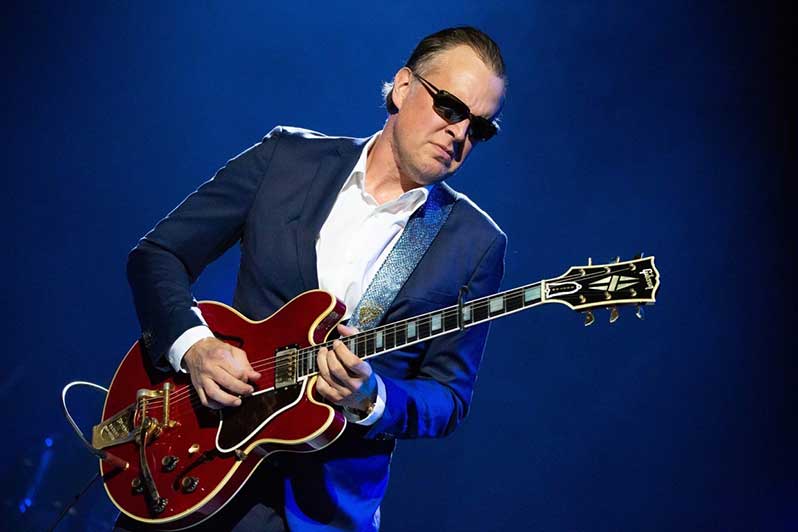
I said at the start of this piece that the blues isn’t a uniform sound, and that’s true.  But much of its potential audience is predominantly focused on blues-rock, and privileges guitar wizardry above all else.  A few years ago Joe Bonamassa observed that: “I have learned unfortunately that people want to hear me overplay over blues-rock changes.  So this is what we do.”  He had his tongue slightly in his cheek, but it’s telling that he made this comment in the course of a ‘Rig Rundown’ video devoted to exploring at length the technicalities of his guitars, amps and pedal board.*
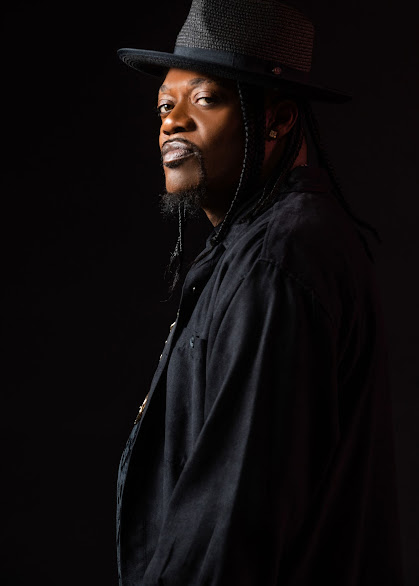
The likes of Bonamassa, Eric Gales and Philip Sayce may be classified as blues-rock artists, but if you go to one of their gigs you’ll find that a large part of the audience are primarily guitar fiends, who go batshit crazy over displays of breakneck soloing.  No harm to these artists – I can certainly wig out over a bit of axe madness, and wouldn’t want to eradicate it.
But it’s not enough.  I like songs, and I like wit, emotion and imagination – a more varied diet if you like.  Of course there are blues and roots artists – even some blues-rock artists – who cater for those diverse expectations one way or another, but increasingly I find myself looking further afield.
In a similar vein some blues artists may also feel the need to broaden their horizons, not just artistically but in order to make a sustainable living.  A couple of years ago I went to see Joanne Shaw Taylor, who was touring Britain on the back of her impressive soul-inflected album Nobody’s Fool.  She was 37 at the time, but from a cursory look round the (not sold out) hall it was clear that most of her audience was considerably older – balding heads like my own abounded.  If I was her that would have worried me, seeing my target audience become more advanced in age.  Was that a trend that encouraged Taylor to try out the soul leanings of Nobody’s Fool, in search of new listeners?  Maybe yes, maybe no, but it wouldn’t surprise me.
I still love blues music in many of its different manifestations.  And the blues will endure, no doubt.  As I’ve said before, the House of Blues has many rooms.  In some of those rooms devotees will continue to cherish its roots and traditions.  In others they’ll experiment with new possibilities, giving the blues fresh energy and keeping it current.  But there’s a big musical world outside the House of Blues too, and maybe we’ll bump into each other out there from time to time.

^Brought together in his book I Can't Stand Up For Falling Down.
*You can find the quote from Joe Bonamassa at about 31:09 in the video, if you're interested.

Thursday, July 25, 2024

Albert Castiglia - Righteous Souls

Regular readers will know that now and then I look askance at albums stuffed with special guests, especially if they rely heavily on covers of blues classics.  Seems to me that all too often these are conceived of as a marketing wheeze, to drum up interest from fans of other artists. Happily though, this isn’t the case with Righteous Souls, the new album from Albert Castiglia, which features a bundle of his blues compadres.  This ain’t some two-bit, going-through-the-motions collection.
For one thing, the eleven tracks include four originals, ensuring there’s an authentic Castiglian flavour.  For another, the covers are (mostly) lesser known fare, so still fresh on the ear.  And between 'em they combine to deliver a tasty range of blues of different hues.
Taking those originals first then, ‘Centerline’ kicks things off in gritty, punchy fashion, with booming bass courtesy of Jerry Jemmott to go with shuffling drums from Derrick “D’Mar” Martin.
Albert Castiglia waits patiently for a crowd of special guests to get on the bus
Pic by Eduardo Whaite
Castiglia’s nagging vocal is complemented by loose-limbed backing from Lisa Andersen, and on the guest front Popa Chubby pops up to add extra fuel to our Albert’s own guitar fire.  And right from the off, kudos to producer/engineer Kid Andersen for the meaty sound.
Taking a different tack, ‘Mama, I Love You’ is a duet with Kevin Burt that takes a sombre look at the lot of black lives in modern America.  “Aint no sense, ain’t no reason,” says Castiglia, “For folks of colour, it’s open season.”  And he backs up his anger with a couple of scorching guitar solos, the second even more fiery than the first, which also serve to demonstrate that when it comes to epic picking he doesn’t need any assistance.
Penultimate track ‘No Tears Left To Cry' is a country-ish stroll with echoes of JJ Cale, with simple drums complemented by bobbling bass as the backing for a downbeat lyric.  “I don’t trust happiness, never have and never will,” sings Castiglia, while Gary Hoey chips in with – I’m guessing – the frequent injections of squeaking slide.
Only the chugalong ‘Till They Take It All Away’ falls a little short of AC’s best writing, and even then it has a bit of dig both musically and lyrically, as he complains about ordinary folk getting screwed over.  It comes with a fair smattering of wah-wah guitar, which I reckon is the contribution of Ally Venable, who has a penchant for the pedal.
Several of the covers lean in a Chicago blues direction, two of them penned by Castiglia’s erstwhile boss Junior Wells, naturally enough featuring harmonica contributions from Rick Estrin. ‘Come On In This House’ comes over like a slowed down take on Howlin’ Wolf’s ‘Howlin’ For My Darlin’’, Estrin’s harp swelling and moaning alongside Castiglia’s emphatic, growlin’an’hootin’ vocal.  Jim Pugh adds chiming barroom piano, and Kid Anderson unpacks his twang to bring a different six-string flavour.  The closing ‘What My Mama Told Me’ is in a more rootin’, tootin’ Chicago vein, with squawling harp from Estrin, rasping vocals from Castiglia, and Monster Mike Welch contributing bouts of quivering, jangling, needle-sharp guitar.
‘Get Down To The Nitty Gritty’, written by Muddy Waters alumnus Luther ‘Snake’ Johnson, is good fun pure and simple – beer-hollering, hip-wiggling fun, with behind the beat drums, walking bass, and sparkling, scattergun guitar licks.  It’s certainly more of a novelty than ‘You Can’t Judge A Book By The Cover’.  Still, Rayne Castiglia duets nicely with her dad here, her easy-going drawl contrasting with his growl, and there’s some stinging guitar soloing too, though I’m not convinced fellow guest Christone “Kingfish” Ingram actually adds much to the equation.
ZZ Hill’s ‘You Were Wrong’ features some skedaddling sax work from Jimmy Carpenter, and a blistering organ solo from Pugh, over hyperactive bass and a jittery rhythm, but its fade-out ending suggests a slight lack of conviction.  That isn’t the case with Buddy Guy’s ‘The Dollar Done Fell’ though, a dark and moody funk outing with cavernous, twitchy bass and some slinky backing vocals from Ms Andersen, plus guitar exchanges between Castiglia and Josh Smith that start out nimble then get urgently conversational to reflect the cost of living crisis subject matter.
Which just leaves the distinctly Jimmy Buffet-like, Hispanic-tinged country-soul of ‘All Our Past Times’, on which Castiglia finds an excellent vocal foil in Danielle Nicole as they dramatize a couple turning around – maybe – a relationship that’s poised by the exit door.  Pugh adds swirling organ, and Joe Bonamassa drops by – of course he does – to add a second solo that’s good, but doesn’t necessarily add much to Castiglia’s own showing.
So yeah, Righteous Souls may have a couple of lesser moments, but it’s still a solid, stimulating outing. I'd go so far as to say it could even make the “special guests” concept respectable - maybe.
 
Righteous Souls is out now on Gulf Coast Records.

Friday, November 10, 2023

Various Artists - Heavenly Cream: An Acoustic Tribute To Cream

So here we have an array of big names, including the likes of Bernie Marsden, Ginger Baker, Joe Bonamassa, Paul Rodgers and Maggie Bell, getting together in various combinations to deliver an acoustic tribute to Cream.  This raises a coupla questions, I’d say.  Like, why acoustic?  And really, when you get right down to it, just - why?
The answer to the second question seems to be simply that it was cooked up as a result of a discussion between a Quarto Valley Records honcho and sometime Cream lyricist Pete Brown, the latter then kicking off the trawl for some personnel.  As for the first question, your guess is as good as mine.
It's Ginger Baker - stand well back!
And since we’re talking about Pete Brown, the guy crops up to sing on three tracks here: ‘White Room’, ‘Theme For An Imaginary Western’ and ‘Politician’.  And his vocals are, to be blunt, consistently duff.  It’s a significant handicap to all three songs, though ‘White Room’ is at least graced by an interesting string arrangement.  But towards the end of a rather plodding take on ‘Politician’ Brown reaches a real low with a spoken interlude that is simply embarrassing.
To be honest, the omens aren’t that good right from the intro to the opening ‘I Feel Free’, where the “bomp-bomp-ba-bomp-bomp” vocal motif is accompanied by some ill-advised plonking piano notes from Malcolm Bruce, the multi-instrumentalist son of Jack Bruce who is a mainstay of the album’s cast list.  Thankfully he makes more positive contributions elsewhere, such as his wistful, controlled vocal on the airy ‘We’re Going Wrong’ (also featuring some tasteful strings), and his excellent elasticated bass on ‘Deserted Cities Of The Heart’.
‘Deserted Cities . . .’ is one of two tracks featuring Joe Bonamassa, who brings the lyrics to life with a punchy vocal, over some steely strumming in tandem with Bernie Marsden, and also contributes a highly enjoyable spangly acoustic solo.  Bonamassa and Marsden also join forces on a satisfying version of ‘Sunshine Of Your Love’, deploying a buzzing guitar effect to add some
The late lamented Bernie Marsden does his stuff
extra zip over the suitably pummelling drums and percussion of Ginger Baker – yes indeed – and Abass Dodoo respectively.
There are some other good moments too, notably on the celebrated Cream covers ‘Crossroads’, ‘Spoonful’ and ‘Sitting On The Top Of The World’.  Bernie Marsden digs out a growl to provide some necessary earthiness on the first, and adds a sterling acoustic solo - naturally.  And while I’m not keen on Bobby Rush’s normal schtick, he certainly brings authentic blues groaning and squawking harp to ‘Spoonful’ and ‘Sitting On Top Of The World’, on the latter duetting with Maggie Bell, whose pipes are also still in full working order.
But here’s the thing: these renditions have much more to do with the likes of Howlin’ Wolf and Willie Dixon than Cream.  And that’s fine by me, but seems to miss the point.
Elsewhere, Deborah Bonham delivers a fine vocal on a slinky reading of ‘Badge’.  But when Paul Rodgers pops up on the closing ‘Born Under A Bad Sign’ my first thought is that it’s not a patch on the version on his own Royal Sessions album, and would have benefitted from the warmth and depth of that album’s horns. But guess what?  Elsewhere on this set we have the legendary Pee Wee Ellis contributing sax to ‘Tales Of Brave Ulysses” and the nondescript ‘Sweet Wine’, along with trumpet from Henry Lowther.  Go figure.
So Heavenly Cream is a strange brew of good stuff and misfires, and in fact an odd project altogether.  I come back to that question – why acoustic?  Cream’s studio stuff may sound a bit undercooked nowadays, but they really made their name by cranking everything up live: the virtuosity, the jamming, and yes, the volume.  They were the original power trio.  So why dream up a tribute that travels resolutely in the opposite direction?  Beats me squire.
 
Heavenly Cream: An Acoustic Tribute To Cream is out now on Quarto Valley Records.

Tuesday, October 10, 2023

Joe Bonamassa - Blues Deluxe Vol.2

And so Joe Bonamassa releases his second album of the year.  But where the live album Tales Of Time was (mostly) an epic, quasi-proggy sounding animal, Blues Deluxe Vol.2 does (mostly) what it says on the tin, as Bonamassa goes back to his blues roots.  And the first thing to be said is that this collection of eight covers and two originals is a perfectly enjoyable affair.  However . . .
What I like about it is that much of the time Bonamassa and his gang sound like they’re having a real good time.  Guitar Slim’s ‘Well, I Done Got Over It’, for example, is honest to goodness,
Joe Bonamassa leans into the blues
Pic by Adam Kennedy
swinging fun, with behind-the-beat drums from Lamar Carter and strolling bass from Calvin Turner, plus schmoozing horns and a neat shift in the backing to underpin JB’s solo.  The following ‘I Want To Shout About It’ underlines the point, hinting at Sam Cooke and even Fats Domino in its swaying soulfulness, all burbling bass, lazy beat and good-time backing vocals – but amped up into an R’n’B swinger of a very Springsteen-esque disposition, with Federici-like organ from Reese Wynans, sparkling guitar play from Bonamassa, and hell, even a sassy sax solo from Paulie Cerra to brighten your day.
‘Lazy Poker Blues’ simplifies things even further, shuffling along briskly and giving a jolt of 21st century electricity to the Fleetwood Mac boogie, with some piercing guitar from Joey boy and barroom piano stylings from Wynans to generate even more of a party mode.  Meantime ‘Hope You Realize It (Goodbye Again)’ goes uptempo in a different, funkier direction, with lots of drive and oomph powered along by Turner’s motoring bass, before downshifting into a jazzier, horn-inflected bridge to introduce Bonamassa’s solo.
When it comes to slower stuff, the album opens with ‘Twenty-Four Hour Blues’, originally recorded by Bobby ‘Blue’ Bland.  And very good it is too, with sweeps of strings recalling Bland’s stylings, with Bonamassa’s confident delivery demonstrating just how much his vocals have improved over the years.  All the same, he can’t quite match the languid soulfulness Bobby had at his disposal, though he does make up for it with some sizzling soloing.  In a similar vein, while Paul Rodgers would surely make a better fist of Albert King’s ‘You Sure Drive A Hard Bargain’, Bonamassa has a good enough shot at it for you to imagine it being an outtake from Rodgers’ Royal Sessions album.
‘Win-O’ is a proper slow blues, in a reflective rather than elegiac vein.  However – remember that however up top? – I could live without the horns that pop up to gild the lily with squirting interjections now and then.  And same applies to ‘The Truth Hurts’, a Kenny Neal song on which both Kirk Fletcher and Josh Smith turn up to supply guest vocals and guitar, but which suffers from a so-so arrangement on which the horns again take up too much space, distracting from the contributions of the three guitar honchos, which should surely be the USP of the track.
Also however, and not for the first time, I feel like Bonamassa has got overly used to the presence of backing vocals filling out songs.  They make good contributions at times here, but are they really necessary on ‘Is It Safe To Go Home’, the closing track written by Josh Smith? It’s an archetypal Bonamassa epic slow blues, on which he delivers a good, committed vocal, but those swelling backing voices and the strings (or string-sounding keys) take it away from the rootsy mood and back towards the widescreen stylings of Tales Of Time.
So like I said, Blues Deluxe Vol.2 is a perfectly enjoyable album.  But I think it’s time for Joe Bonamassa to let go of a few over-familiar elements of his recent sound, and shake things up more.  Go on Joe, and surprise us!
 
Blues Deluxe Vol.2 is out now, and can be ordered here.

Thursday, April 13, 2023

Joe Bonamassa - Tales Of Time

Although Joe Bonamassa tends to get pegged as a blues-rock guy, nowadays he’s as likely to spread his wings and explore broader classic rock horizons - as this live set recorded at the famous Red Rocks Amphitheatre confirms.  And when he sets the controls just right for a spot of widescreen hard rocking, the results are plenty satisfying.
The opening ‘Notches’ does the business very nicely, for example.  There’s an African sorta styling to the intro, with some evocative spoken word narration over quiet percussion, before the baton is handed to JB for some piercing, Gilmour-like guitar remarks.  Then it’s off and running, with a spiralling riff that’s shadowed and heavily reinforced by Calvin Turner’s bass.  That heavy
Joe Bonamassa tries to play phantom guitar neck
Pic by Jenise Jensen
groove is the prime attraction, though a Zepp-ish bridge also announces a pretty scorching Bonamassa solo, and if Reese Wynans’ swirling organ solo is so-so, it’s fair to say he more than makes up for it elsewhere.
If anything ‘Curtain Call’ is even better, as they throw the kitchen sink at it.  There’s stomping guitar and drums, then Arabic-sounding keys à la ‘Kashmir’, setting up the drama to come.  We get niftily counterpointed guitar and keyboard motifs, gutsy rhythm guitar and pseudo-baroque lead, culminating in a shooting star sound that I suspect comes from Bonamassa’s guitar, before returning to the Arabic theme.  And ‘Time Clocks’ is impressive too, mixing things up to good effect with slamming chords and country-esque picking around a grabber of a soaring, emphatic chorus.  It goes from thoughtful and subdued to to urgent and angsty, and some melodic, quasi-Celtic soloing from Bonamassa adds icing to the cake.
On the other hand, there are times when the epic approach sounds like Bonamassa repeating himself - ‘Mind’s Eye’ being a case in point, despite good moments of rolling drums and precise, needle-sharp guitar, and awestruck-sounding backing vocals.  Similarly ‘The Loyal Kind’ feels formulaic with its reflective opening giving way to an urgent riff and tense vocals, though the guitar solo feels more interesting, and better connected to the song, than in a couple of other cases.
It's a relief then, that other tracks offer some different vibes.  ‘The Heart That Never Waits’ has a bluesier feel, laid back and steady-as-she-goes, with some excellent Wynans ivory-tinkling and top drawer backing vocals from Mahalia Barnes, Jade MacRae and Danielle DeAndrea.  (Though the ubiquity of those female voices in Bonamassa’s recent repertoire, good as they are, also contributes to a sense of “same old same old” now and then.)  ‘Known Unknowns’, with its cooler, mellower opening, feels lighter and more soulful, with an airy guitar riff and some organ frosting from Wynans, and a tasteful guitar break leading to some variations on a theme – though Bonamassa, not for the first time, can’t resist throwing in a few high-velocity salvos whether they’re needed or not.
There’s no arguing with the closing ‘Evil Mama’ though, resurrected from the Redemption album.  Here we have (more of) a flat-out rocker, with a hard-revving, push-me-pull-you riff and a strong, hooky melody.  It charges along like an F1 car going through the gears, enhanced by a Wynans organ solo, and a piercing Bonamassa effort over rumbling bass and steady drums.
Tales Of Time is an enjoyable album, with lots going on to keep things interesting, and will doubtless please loyal Bonamassa fans no end.  If I seem to have some qualms now and then, well, maybe it’s not really meant to be listened to with a pen in hand, making notes.  Let the arrangements and the playing wash over you – with excellent sound quality, I might add – and those occasional moments of déjà vu may just drift past on the current.
 
Tales Of Time is released by Provogue Records on 14 April, on CD/DVD, CD/Blu-Ray, and 3LP 180gram Vinyl, and can be ordered here in the UK.

Friday, March 10, 2023

Mike Zito & Albert Castiglia - Blood Brothers

It’s no big secret that I think Mike Zito and Albert Castiglia have, individually, done some great stuff in recent years.  In particular, your honours, I would like to enter into evidence Castiglia’s 2019 album Masterpiece, which was in fact produced by Zito, and on which the two of them played all the instruments to terrific effect.  So it’s easy to see how the Blood Brothers album has come about – these two guys are mucho simpatico.
But if Masterpiece seemed like a brilliant DIY affair, the pair have gone in the opposite direction for this collaborative effort, wheeling in the big name production partnership du jour of Joe Bonamassa and Josh Smith, plus a bundle of other musicians to contribute as necessary.  And the results are – well, rather good.
Mike Zito and Albert Castiglia - lean on me, brother
Pic by Norma Touchette
The best moments here are when they get expansive.  The Zito tune ‘In My Soul’ starts off with acoustic strumming and an aching vocal from Zito himself, gets elevated by some soaring backing vocals from Jade Macrae and Danielle DeAndrea, and then kicks into a higher gear with a staccato electric riff.  The light and shade has a vibe similar to Whitesnake’s ‘Ain’t Gonna Cry No More’, but more American – more Southern perhaps.  Castiglia’s ‘A Thousand Heartaches’ also leans on acoustic guitar, and subdued organ, to develop an atmosphere of love and melancholy, decorated by a sparkling little turnaround on its way to a lyrical Bonamassa solo, and the spare but perfect lines:  “All I wanna do is see you happy / That’s all I ever want for you / Although we ain’t together / Doesn’t mean that it’s not true”.  It’s not a complicated song, but it’s a classy one.
The slow blues ‘You’re Gonna Burn’, which interleaves a patient Castiglia vocal and fluttering guitar licks, builds a sense of bitter relationship failure, with stabbing chords heightening the effect of Albert’s dynamic guitar solo.  And if Zito’s mid-paced ‘No Good Woman’ has a touch of swagger to its riff, and some spikiness in the pair’s combined lead work, it stills conveys an air of resignation summed up by the line “I’ll be happy when you let the back door slam”.
Elsewhere the mood is largely more upbeat, as on the infectious boogie of opener ‘Hey Sweet Mama’, embellished by some tootling rock'n'roll piano from Lewis Stephens.  But it’s noticeable that six of the 12 tracks are written by others, which ain’t what I expected, and it feels like a missed opportunity to pool their writing talents. So while Tinsley Ellis’s ‘Tooth And Nail’, with its twisted around ‘Green Onions’ riff, is given a suitably tough and sassy Castiglia vocal, and has some scraping Zito slide en route to a duelling guitar outro, I reckon AC himself could have produced something more potent.  Similarly, while John Hiatt’s ‘My Business’ leans towards the tongue-in-cheek stuff that Zito does so well – like ‘Don’t Break A Leg’ for example – it’s lacking a bit of zip, a bit of spark, a bit of je ne sais quoi as they rarely say in these parts.
In another mode, ‘Hill Country Jam’ is an instrumental penned by Zito and Josh Smith, and a well executed, breezy affair it is too – but I’d prefer these guys to be sticking a shot of their own brand rock’n’roll in my ear.  Still, ‘One Step Ahead Of The Blues’ makes for a laid back, thoughtful finish, as the two of them share the work on a tale of resolve and stoicism.
Fans of Mike Zito and Albert Castiglia will like this.  Hell, I like this.  I just have the nagging feeling that this album could have been so much bigger, so much bolder – a fusion of Zito and Castiglia to blow the bloody doors off.  Hopefully one of these days they’ll hunker down together again, and give us that album.  Meantime, Blood Brothers is an enjoyable downpayment.
 
Blood Brothers is released by Gulf Coast Records on 17 March.

Monday, March 6, 2023

Marc Broussard - S.O.S. 4: Blues For Your Soul

Once upon a time, back in 1978, Whitesnake included a song called ‘Ain’t No Love In The Heart Of The City’ on their Snakebite EP.  It was a resonant introduction to the work of Bobby ‘Blue’ Bland, and when I later heard the work of the man himself I was pretty smitten with his warm, soulful, bluesy delivery.  I’ve had a liking for voices in a rich, soul-drenched vein ever since.
All of which makes me a prime candidate to lap up the singing of Marc Broussard, when he opens up his latest album S.O.S. 4: Blues For Your Soul with an aching, pulsing take on Bland’s ‘I’ve Got To Use My Imagination’.  Broussard absolutely nails it, and co-producer Joe
Marc Broussard - "Hey, is this mic turned on?"
Pic by J Auger
Bonamassa follows his example with a taut, evocative guitar solo.  It’s a vibe effortlessly recaptured on the closing ‘When Will I Let Her Go’, the one original on offer.
With just that one new song among the 12 tracks here, it’s fair to say that if you’re looking for something ground-breaking then step right along, ‘cause this album ain’t it.  But what might be lacking in novelty is made up for in quality.
Johnny ‘Guitar’ Watson’s waltz-like ballad ‘Cuttin’ In’ is given a relaxed and romantic reading that stands comparison with the excellent version by Sean Costello, with pinging guitar licks from guest Roddie Romero played off against sweeping strings.  ‘Love, The Time Is Now’ mines an even softer soul seam just as effectively, with Broussard effortlessly evoking a Sam Cooke vibe.
It's not all sensitively lovelorn stuff though.  The spikier blues of ‘I Asked For Water’ is one of the highlights, as Broussard digs out a suitably Wolf-ish growl, counterpointed by some moaning harp courtesy of JJ Grey.  Also at the tougher end of the spectrum is ‘Locked Up In Jail (Prison Blues)’, which is as primitively low key and insistent as you might expect from a John Lee Hooker song, studded with shivering guitar from co-producer Josh Smith, and with a wearily reflective vocal from Broussard.  Meanwhile ‘I’d Rather Drink Muddy Water’ starts out easy, with tinkling piano, and laid-back guitar and vocals, it gets revved up more on the second verse, then swings and punches in big band style on the third, prefacing a jazzy, low end piano solo and some stinging guitar.  There’s a horn backdrop on ‘Driving Wheel’ too, which rolls along behind the beat in swaggering style, with Broussard getting soulful in increasingly agitated, testifyin’ fashion, and Bonamassa knocking out a solo with bite.  
There a couple of misfires, mind you.  BB King’s ‘I Like To Live The Love’ is a lightweight, happy-clappy affair that sounds as if it would be better suited to some pastel-suited 70s vocal quartet than either King or Broussard.  And while I love a good blues ‘train’ song, their efforts to do something different with the railroad rhythm on ‘Empire State Express’ actually end up a bit of a mess.
But here’s the thing.  In the PR bumf for this album, Marc Broussard says that while blues is in his wheelhouse, “It’s not really my field of expertise”.  Well, you could have fooled me.  S.O.S. 4: Blues For Your Soul – and boy is that a cumbersome title – showcases a guy who is vocally right up there with the classic blues’n’soul groaners, moaners and crooners.  Bobby ‘Blue’ Bland would be impressed, never mind me.
 
S.O.S. 4: Blues For Your Soul is out now on KTBA Records, and can be ordered here.

Monday, October 31, 2022

Joanne Shaw Taylor - Nobody's Fool

Hook!  Hook!  Hook!
Chorus!  Chorus!  Chorus!
Hit!  Hit!  Hit!
I can imagine co-producers Joe Bonamassa and Josh Smith sitting down at the end of a day’s work on Nobody’s Fool and rubbing their hands with glee at a job well done.  If Joanne Shaw Taylor’s core audience to date has been blues-rockers and guitar nuts, then this album has the potential to garner a wider variety of enthusiastic listeners.
How so?  Because this is an autumn release that’ll help you cling on to summer with its sunny-side-up soul/pop confections, that’s how.  But fear not, six-string fans, there are still lots of tasty guitar breaks to slake your thirst.
The tone is set by the title track.  If Johnnie Walker were to play 'Nobody's Fool' during his Sounds of the
Joanne Shaw Taylor - happy days are here again!
Pic by Kit Wood
Seventies
 radio show, you’d happily accept it was a hit from back then and just get in the groove as it chugs merrily along – and ponder just how much of a nod that sweet guitar intro gives to ‘My Sweet Lord’.
The following ‘Bad Blood’ picks up the baton perfectly with its low-twanging Hispanic guitar figure, heralding a heaven-sent chorus that’s trotted out multiple times to maximise its impact.  The attention to detail is terrific, from the lazy, right-in-the-pocket beat to the placement of the female backing vocals, to the flurries of organ.  Mind you, they miss a trick with the tubular bell that gets chimed here and there, but not often enough for me.  More tubular bells, I say!
There’s a Sixties soul sound at work there, and there’s more of it with the post-Motown vibe of the romantic ‘Won’t Be Fooled Again’, Bonamassa getting in on the act by trading spot-on solos with Taylor, but all totally in service of the song.  ‘Runaway’ is rippling, blissed-out pop to reinforce the mood, with tripping drums, sun-dappled electric guitar, rubbery bass from Calvin Turner, and a rhythmic vocal nicely delivered by Taylor.
The steady, measured ‘Just No Getting Over You (Dream Cruise)’ is carried along by a bright’n’breezy guitar riff, some tick-tocking wah-wah guitar (or perhaps clavinet) in the background, and – hey, is that a cowbell?  Meanwhile ‘Then There’s You’, a bluesier but still catchy item, struts along on layers of low-slung guitar riffing – the sort of thing you can visualise a trio of backing singers dancing along to in sinuously choreographed fashion.
They take the load off twice, both times to good effect.  ‘Fade Away’ is a total change of pace to a spare, sad slowie led by Taylor’s wistful voice and Deron Johnson’s piano, and then garlanded by cello from Tina Guo that lends an extra air of melancholy.  It’s also a lovely tune.  ‘The Leaving Kind’ is like a mash-up of a quasi-torch song and epic ballad.  It’s built around some timeless-sounding acoustic guitar chording, and ultimately a sweeping guitar solo, emoting away big time before a dying fall.  That’s where the album should have ended, fellas, instead of tacking on the upbeat ‘New Love’ afterwards, good as it is with a Motown-ish feel again.
Elsewhere, there’s also a cover of the Eurythmics’ ‘Missionary Man’ undertaken with Dave Stewart himself.  With its synthy bass sound and squelchy guitar break it’s interesting, and different from the original, but possibly the least impactful thing on the album.  The following ‘Figure It Out’ though, featuring scratchy guest guitar from Carmen Vandenberg, hits the power pop bullseye dead centre, evoking both ‘Teenage Kicks’ and The Tourists’ take on ‘I Only Want To Be With You’.  Oh yeah, and it smacks you over the head with the chorus till you submit.
In days gone by I’ve had some reservations about Joanne Shaw Taylor’s singing, and she’s still prone to a curious vowel sound now and then.  But really, full credit to her for leading from the front and capturing the spirit of this enterprise, whether on the sun-drenched upbeat material or the elegiac ‘Fade Away’.  She and the whole ensemble make Nobody’s Fool sound effortless – and very, very easy to like.
 
Nobody’s Fool is out now on KTBA Records, and can be ordered here.

Monday, October 10, 2022

Jimmy Hall - Ready Now

Once upon a time, many moons ago, Jimmy Hall was singer, harmonica and sax player with the Southern rock band Wet Willie.  They had some big hits Stateside back in the Seventies, but suffice to say their name only registers at the edge of my consciousness.  So I come to his new solo album Ready Now, produced by the increasingly busy duo of Joe Bonamassa and Josh Smith, with no real expectations.
Initial signs are promising, as the boogie of opening track ‘Jumpin’ For Joy’ aims to deliver a good time, and succeeds.  The guitar riffing may be pretty simplistic, but with skedaddling drums from Greg Morrow, bursts of organ and barroom piano from the ubiquitous Reese Wynans, and
Jimmy Hall checks out the bar to see if Bonamassa is getting his round in
Pic by Drew Stawin
a rock’n’rollin’ solo from Bonamassa, it’s an infectious concoction.  And Hall plays his part too, hollering away over the top like a good ‘un, and giving his harp a satisfying blast too.
For a guy in his seventies, Hall’s voice is in admirable nick, with plenty of wattage and range.  What he does with it is more of a mixed bag however.  On the following ‘Risin’ Up’, with its soulful ‘Take Me To The River’ type vibe, he gives it plenty without offering much light and shade.  The same is true on 'Ready Now' itself, a song about turning over a new leaf that all sounds a bit earnest, but is redeemed by a slide soul from Warren Haynes that carries some real cutting edge.  And if his harp solo on the song-of-the-road ‘Will You Be Here’ shows plenty of subtlety, his vocal could be more supple.
He does better elsewhere though, his urgency and power working a treat on the rocking ‘Girl’s Got Sugar’, with its hard-chugging rhythm guitar, more stonking keys from Wyman, and an excellent, ducking and diving guitar excursion from Josh Smith.  And he shows more vocal variety on both ‘Holding On For Dear Love’ and ‘Without Your Love’. The former is a soulful ballad, a bit sugary for my taste, but given extra colour by the harmonies of Jade McCrae and Dannielle De Andrea – who deserve plaudits for their contributions to several tracks – and by a funky wah-wah turn from Bonamassa.  ‘Without Your Love’ is a contemplative affair led off by acoustic guitar, with the range and dynamics of Hall’s vocal suiting the growing intensity of feeling, and the guesting Jared James Nichols adding a tasteful, nicely toned guitar solo.
With the addition of the slowie ‘A Long Goodbye’, a Bonamassa co-write, it feels to me like there’s a bit much of this balladeering tendency, but at least this one has an epic, cinematic quality that’s very JB, topped off by him throwing the kitchen sink at a showcase solo, before an anthemic refrain to close.
Other songs explore different directions, with mixed results.  ‘Dream Release’, a co-write between Hall and his son, is an elegy for his friendship with Greg Allman, but to these ears works none too well, maudlin in tone and sounding like it originated in musical theatre.  ‘Love For It’, contrastingly, is a little gem.  With its out of the ordinary percussion and bass framework, soul-gospel roots, and unusual shift in tone from verse to chorus, it may not be a barn burner, but it’s still a genuinely original song.  And Hall does a good job narrating the bluesy song of experience ‘Eyes In The Back Of Your Head’, as it ripples along on acoustic guitar, and tootling harp.
Bonamassa completists may be interested in Ready Now for his five co-writes and varied guitar contributions. Overall though, it’s an inconsistent album.  Some tracks hit the mark, but others fall a bit short, especially when they lean towards the emotive.  Throwing a bit more wit and rock’n’roll into the mix may have suited Jimmy Hall better.
 
Ready Now
 is out now on KTBA Records, and can be ordered here.

Tuesday, April 12, 2022

Edgar Winter - Brother Johnny

Brother Johnny is a whopper of a tribute album to his sibling from Edgar Winter.  You get 17 tracks for your spondoolicks, running to 76 minutes – a double album, in old money - and with a stellar cast of guests into the bargain.  But while much of the material is well known for having been recorded by Johnny Winter, and most of those big-name guests are guitar hotshots like Johnny, it’s worth underlining that it’s very much Edgar Winter who is the glue holding Brother Johnny together.
Edgar’s snarling vocal grabs the attention on the opening ‘Mean Town Blues’ just as much as the turbo-charged riffing, or the wicked slide solo that Joe Bonamassa whacks out over a Diddley-esque rhythmic passage.  It’s a meaty, high-energy blast of blues-rock, first recorded by Johnny in 1968, with a vibe that makes me wonder how much he may have influenced fellow Texans ZZ Top.
Edgar Winter - blowing life into the tribute to his brother Johnny
Speaking of whom, Billy Gibbons turns up to provide vocals and a solo on ‘I’m Yours And I’m Hers’, while Derek Trucks is also on hand to add a gutsy slide excursion over the driving rhythm section.  As for the aforementioned Bonamassa, he sounds completely at home on ‘Self Destructive Blues’, letting rip again both vocally and on guitar as it’s powered along by some hyperactive bass and drums from Sean Hurley and Greg Bisonette.
This is core Johnny Winter territory, and there are some other crunking examples on ‘Rock’n’Roll Hoochie Koo’, ‘Jumpin’ Jack Flash’, and ‘Highway 61 Revisited’.  It’s maybe a shame that Rick Derringer, who wrote it, doesn’t report for guitar duty on the first of these.  But it’s still a raunchy old thing with its distinctive descending riff, Steve Lukather giving it some welly on the solo, and Bon Jovi guitarist Phil X adding some extra zing via high-flying backing vocals.  Edgar’s roared “Yeah!” at the start of ‘ . . . Jack Flash’ is a statement of intent, heralding pounding, all-action drums, ringing rhythm guitar from Waddy Wachtel, and some helter-skelter soloing from Phil X.  All in all, it lives up to the riotous energy of that famous rendition by Johnny Winter on the Old Grey Whistle Test.  And ‘Highway 61 Revisited’ is rattling, Bob Dylan rock’n’roll, right down to the slide whistle whoops, with thumping piano and a suitably edgy vocal from Edgar, plus wailing lead guitar from Kenny Wayne Shepherd.
There’s more of this kind of thing, not least with the barely contained raw energy of ‘Guess I’ll Go Away’, which features the late lamented Taylor Hawkins supplying lead and backing vocals, and Dave Rappaport cranking out the rising-and-tumbling guitar riff and a careening solo.  But the album is leavened by some different stuff.  There’s the acoustic ‘Lone Star Blues’, an up-to-date Edgar composition on which he duets with Keb’ Mo’ for some loose and easy storytelling.  There’s ‘Stranger’, which brings together the freaky combination of Ringo Starr on drums and Joe Walsh on lead guitar, and Michael McDonald delivering a soulful vocal that’s both weary and silky. And there’s the Ray Charles ballad ‘Drown In My Own Tears’, with Edgar showing a softer vocal side against the backdrop of horns.
Does the world really need another take on ‘Johnny B. Goode’, even if it was a Johnny Winter staple?  No harm I suppose, and at least Edgar puts his own stamp on it with his rockin’ piano and muscular sax, plus a swathe of beer-drinkin’, barroom vocals.  At the other end of the spectrum is the closing ‘End Of The Line’, an elegiac Edgar Winter original backed by piano and strings.  Its sentiments may make it an understandable choice as a final salute, but its Great American Songbook stylings don’t make for the best fit.
There are tribute albums aplenty these days.  How many of them have any longevity with their audience, and how many end up as merely ephemeral celebrations of their subject?  Answers on a postcard, please.  But one thing that Brother Johnny has going for it, I reckon, is the personal commitment that Edgar Winter has invested, as curator, performer and producer.  This ain’t your ordinary, everyday tribute album - it’s a brother-to-brother thing.

Brother Johnny is released on 15 April by Quarto Valley Records, and is available digitally here.

Tuesday, March 22, 2022

Larry McCray - Blues Without You

It doesn’t take long to establish that Larry McCray is a real McCoy bluesman.  ‘Arkansas’, the opening track on his new album Blues Without You, kicks off with a Bo Diddley beat, over which Reese Wynans’ organ swells and horns add punctuation, until one of those horn notes becomes the springboard for McCray to jump off into an attention grabbing, fleet-fingered first guitar break.  And when he starts to sing, in a weighty, BB King-like voice, you know this guy has all the tools.  All the same, it’s nice to also soak up the track’s atmospheric lyric about his home state, enjoyable horn arrangement, and intriguing bass figure, before he delivers a solo that shows off the remarkable precision of his playing, even when performing some remarkable handbrake turns.
It’s clear from that first track that McCray needs no assistance on the guitar front, but it has to be
Larry McCray is the real McCoy
Pic by Arnie Goodman
said that the guesting Warren Haynes justifies his presence on ‘Down To The Bottom’.  The song starts with just McCray singing over simple acoustic guitar, then augmented by subtle strings, until drums and bass ease in.  McCray’s vocal is heartfelt, and backed up by soaring female harmonies alongside the strings.  And if all that’s good, when Haynes weighs in on slide guitar things take a real Derek & The Dominoes turn, and become pretty darned wonderful.
The other guest turns, by Joanna Connor and co-producer Joe Bonamassa, struggle to make the same impact.  The chugging barroom boogie of ‘Drinkin’ Liquor And Chasin’ Women’, with lots of trilling piano from Wynans, is certainly fun, with McCray inhabiting the vocal brilliantly and delivering a sizzling solo.  But when Connor’s slide guitar enters the fray for a duelling finish there isn’t really enough difference in tone to up the ante.  Much the same is true on the languid funk of ‘Mr Easy’, with its ear-catching smoky bass line.  A couple of minutes in, McCray invites JoBo to “play me some blues”, which he does in quivering style, but does it really offer anything that McCray couldn’t do himself?
The elegiac slow blues of ‘Blues With You (For Paul)’ though, provides a perfect setting for McCray to exhibit his talent.  Here Bonamassa and his production buddy deploy an interesting horn segment for variety, and also sweeping, romantic strings as a restrained counterpoint to McCray’s flickering then fiery guitar, while he also delivers his finest vocal of the album.  ‘Don’t Put Your Dreams To Bed’ is similarly well assembled, an uplifting affair with good piano and organ textures and more strong backing vocals, which peak with a neat “doo doo doo” refrain that brackets another sparkling McCray solo.
Some songs are overlong, notably the otherwise enjoyable ‘Breaking News’, on which smoochy sax and lush strings set up a brisk, darkly soulful vibe for a commentary on the stress of never-ending negative news cycles.  It’s a catchy tune, but needs a twist of something different to justify its six and a half minutes.  No such problems with the closing ‘I Play The Blues’ though, on which McCray sets out his credo with just his voice and acoustic guitar – and emotional conviction.
With a few tweaks, Blues Without You could have been an outstanding album.  As it is, it’s a very impressive return from Larry McCray after a recording absence of nearly seven years. Consider this.  Christone ‘Kingfish’ Ingram gets lots of plaudits as a new generation of blues star, and good luck to him.  But I’d say that anything Kingfish can do, Larry McCray can do - and if not better, then with more maturity and life experience.  And that makes a difference.
 
Blues Without You is released by KTBA Records on 25 March, and can be ordered here. 

Sunday, January 23, 2022

Eric Gales - Crown

Gallus.  It’s a Scottish word.  It means cocky, bold, maybe a bit flashy, and the way Eric Gales introduces himself on Crown – I won’t spoil it for you – is a good example.  The cap fits Eric Gales the guitar player too, who often floats like a six-string butterfly and stings like a bee.
This side of Gales is most in-yer-face on ‘I Want My Crown’, on which he comically calls out co-producer Joe Bonamassa for a guitar-duelling title bout like Ali taunting Sonny Liston.  It’s a fun track too – funky with its tripping drums, thrumming bass, ooh-ing backing vox and shuckin’ an’ jivin’ horns, all of which is just the backdrop for Gales and Jo Bo to rip out some high-octane solos.  Not that Gales needs much of an excuse to put his pedal to the metal.  Opener ‘Death Of
"Yes you, Eric Gales! This review's about you - ain't nobody else here!"
Pic by Katrina Size
Me’ may not really be a drag race of a track, with its heartbeat rhythm and stabbing, thrusting staircase of a riff, but if sheer notes-per-bar is your thang then Gales’ squirrelling, fluttering solo will surely get your juices flowing.
But here’s the thing – lyrically ‘Death Of Me’ isn’t gallus at all.  Instead, singing in a calm voice, Gales ponders the missteps of his youth, and the advice he’d give his younger self now if he had the chance.  See, Eric Gales is a more complex guy than just the cocksure guitar wrangler that's his most obvious face.
He reflects further on his past with songs like ‘Survivor’, ‘You Don’t Know The Blues’, and ‘My Own Best Friend’, and from more than one perspective.  The first of these is tough and lean with a wiry riff, well-suited to a tale of resilience in the face of pressure, which he then embellishes with a typically sizzling solo over a Free-like, bass-leaning riff, while lush organ adds more colour.  ‘You Don’t Know The Blues’ lays out the circumstances that delineate a truly hard life, but rather than going for the obvious, angry blues-rock assault, it’s a loping affair, keeping it matter of fact until Gales ignites a strident solo.  And the middling ‘My Own Best Friend’ stresses the need to learn self-respect, with a lower key, mellifluous solo that recaptures the interest with an unusual theme.
There are the tunes too, that describe the black person’s experience.  ‘The Storm’ is a smooth and soulful song in a Robert Cray vein, with Gales asking “How can you love what I do, but hate who I am?”, and adding “Only love can erase the hate, I’m a witness to that,” before shifting gear and vocally whooping along to a hummingbird-like solo.  ‘Stand Up’, with its breathy backing vocal interjections has an almost romantic vibe that seems incongruous for a song about the need to stand up to racists, and those who think artists should “know their place”.  But it just about works, as Gales’ take is sorrowful rather than bitter, right the way to its subtle electric piano outro.  The mellow arrangement of ‘Too Close To The Fire’ is less successful though, failing to reflect the lyrical tension about the positive relationship he has with an audience and the alienation he often feels on the street, and Gales’ solo remains stuck in this restrained furrow until finally he kicks out the jams and dials up some howling tension and release.
And then there’s romantic Eric, who takes a very different musical turn on ‘I Found Her’, a love song to his missus LaDonna that’s simple and effective when it relies mostly on acoustic strumming and Parisian-style accordion, folding in a quasi-classical acoustic solo.  Does it really need the big, Bonamassa-like epic segment, with its wig-out electric solo, to fully express his affections?  Maybe not, but decide for yourself.  Speaking of LaDonna Gales, Gales’ “Number 1 soul sister” gets her own showcase on ‘Take Me Just As I Am’, displaying a fair old set of pipes, and expressively too, over a strutting James Brown-esque funk workout.
There are a couple of other fun tracks along the way, and three instrumental snippets too, of which only the howling Hendrix sketch ‘Rattlin’ Change’ is worthy of note.  By the time Gales serves up the pseudo-live show-closing jam groove of ‘I Gotta Go’, he may be back in gallus mode, but he’s shown us numerous sides of his personality, musical and otherwise, and kudos to him for that.  Eric Gales is a modern-day axe hero, but Crown makes it clear he’s not a two-dimensional cartoon axe hero.
 
Crown is released on 28 January by Provogue Records/Mascot Label Group, and can be pre-ordered here.

Tuesday, December 14, 2021

Dion - Stomping Ground

Okay, so it’s the season of goodwill and all that, but you know what one of my favourite Christmas movies is?  The Grinch, with Jim Carrey all hairy, green, and most of all grouchy.  So before I get into telling you about the good things on Stomping Ground, I wanna get a couple of gripes off my chest, alright?
Gripe #1:  The album follows the same guest artist formula as 2020’s Blues With Friends.  It’s an approach that can have some artistic value by way of spicing up an artist’s sound and repertoire, but for me repeating the trick seems too much like a marketing tactic.  If the songs are good
Dion - still stompin'!
Pic by Steve Cell
enough, then why not just record with a core band, and pull in name guests on just a couple of tracks if you want some extra stardust?  This is Dion DiMucci fer cryin’ out loud, not Joe Schmo no-one's ever heard of!
Gripe #2:  There are fourteen tracks included here, and while plenty of ‘em are good ‘uns, a few are makeweights.  And are some tracks overextended just to get more mileage out of the guest turns?  Now then it feels like the pudding is being over-egged.
But that’s enough bah-humbuggery for now.  Because when the opening track 'Take It Back' kicks in, it’s a catchy old thing which Dion sells well over a strutting rhythm laid down by the bass and drums.  And Joe Bonamassa, who would probably turn up to provide a guest solo for the opening of an envelope, does in fact elevate the song with a bundle of humorous, on-point and interestingly-toned licks.
The swaying and sinuous ‘Dancing Girl’ lives up to its title with a danceable Latin rhythm fit for your next Salsa class.  And with some pinpoint guitar from Mark Knopfler in his inimitable style, enhanced by some subtle interplay with the piano, it’s very good indeed.  On the other hand, while Eric Clapton brings some decent soloing to the blues shuffle of ‘If You Wanna Rock’n’Roll’, the star of this particular show is Dion himself, singing “I’m a rhythm king baby, I can groove all night long” and other such lines, in a manner that suggests they have less to do with the dance floor than the bedroom.
‘There Was A Time’ is a slow blues with a kinda European feel to its suspenseful melody, and Peter Frampton doesn’t feel the need to fill every crevice with his playing, while there’s plenty more to notice between the deep rolling horns, the rippling piano, and the sweeping strings add to the melancholy feel.  Sonny Landreth delivers suitably weeping slide guitar on the intro of ‘Cryin’ Shame’, but his playing warms up as the song progresses, and instruments interweave on a textured arrangement with a deceptively simple beat.  There’s slide guitar too, courtesy of Keb’ Mo’, on the album’s only cover, a version of Hendrix’s ‘Red House’.  On early listens I was less than impressed, but there is some merit in its rootsy approach and Dion’s plaintive vocal, even if the contributions of Keb’ Mo’ don’t amount to much.
Getting away from the guitars, ‘Angel In The Alleyways’ may not be a classic, but it’s certainly better than ‘Hymn To Her’, Dion’s previous collaboration with Bruce Springsteen and Patti Scialfa.  An acoustic guitar-led piece of Americana, with the Boss and his missus supplying harmonica and hushed harmonies, it manages to combine tension and urgency.  But the two tracks that foreground piano are bigger winners.  ‘That’s What The Doctor Said’ makes lyrical reference to Dr John, and backs that up with a New Orleans groove foregrounding sweeping, swinging ivories from Steve Conn, while horns toot in fine fashion.  And ‘I Got My Eyes On You’ is a rock'n’roll train stoked by Marcia Ball’s piano, rattling along with intermittent horn punctuation and then bright riffs on the chorus, plus twanging guitar from Jimmy Vivino.
There’s more rockn’roll, of the Chuck Berry variety, on the amusing, foot-tapping ‘I’ve Got To Get To You’, on which Dion shares the mic with Boz Scaggs.  But the more interesting duet is the closing ‘I’ve Been Watching’, to which Rickie Lee Jones adds characterful vocals in tandem with DiMucci, the mood shifting between reflective and impassioned in satisfying fashion, while producer Wayne Hood adds fluid guitar that fits the song well.
When you get right down to it, Stomping Ground is a good album.  But it’d be a better one with more focus – focus on fewer songs to maintain the quality, and focus on Dion’s delivery more than a troupe of guests.  Hasn’t the guy earned the right to the spotlight?

Stomping Ground is out now on Keeping The Blues Alive Records, and can be ordered here.

Saturday, June 5, 2021

Joe Bonamassa - Now Serving: Royal Tea Live From The Ryman

It may seem a bit incongruous, selecting the Ryman Auditorium in Nashville, the high temple of country music, for this onstage performance of songs largely drawn from last year’s Brit-guitar-hero-inspired, recorded-at-Abbey-Road studio album Royal Tea.  But JoBo fans needn’t worry that the material has metamorphosed into pedal steel twangin’, Stetson-hatted, Okie from Muskogee fare.  No siree Bob, what’s Now Serving is a guitar-heavy, blues-inflected, hard rock menu typical of the chef du jour.
Opener ‘When One Door Opens’ is almost a microcosm of the variety to be found across the nine tracks from Royal Tea.  It bundles together a mock regal pomp and circumstance intro, a delicious staircase-like riff, a martial rat-a-tat passage, some moody Pink Floydism softened by the harmonies of Jade MaCrae and Dannielle DeAndrea, and – most spectacularly – a monster riff that digs the foundations for a howling Bonamassa wah-wah solo.
Joe Bonamassa at the Ryman - no Stetson, but that's a bit of a country jacket!
Pic by Kit Wood

For me the most satisfying mugs of Tea on offer are ‘A Conversation With Alice’ and ‘Lookout Man!’.  The former rattles along engagingly, with slide guitar thrown into the mix alongside a ripping organ solo from Reese Wynans.  Then a shift in rhythm, with Michael Rhodes stirring in a dollop of funk on bass, brings more swing to underpin a really enjoyable guitar solo.  Meanwhile ‘Lookout Man!’ catches the ear with a novel, synthy sound for its subterranean bass riff, while guest Jimmy Hall adds some squawking harp in tandem with the guitar, evoking a neon-lit urban nightscape in which matters get well’n’truly heavy.
Elsewhere, there’s a swaying bluesy vibe to ‘Royal Tea’, on which Bonamassa challenges himself vocally with the ascending melody on the chorus, and acquits himself pretty well.  But there’s even more blues to the bump’n’grind of ‘High Class Girl’, on which the ‘Green Onions’ flavour of the studio version gives way to echoes of Willie Dixon’s ‘Spoonful’, not least in the brief quote that our Joe slips into his scrabbling storm of a solo.
When it comes to the big epic moments I’m inclined to think the semi-mystical light and shade of ‘Beyond The Silence’, the kind of large canvas picture like ‘The Last Matador Of Bayonne’ that Bonamassa does well, has the edge over ‘Why Does It Take So Long To Say Goodbye’, which builds from a sweeping, romantic guitar figure into a beefed-up Foreigner-style power ballad before shifting into a muscular instrumental passage full of spiky guitar over simmering bass from Rhodes.
There’s more funky bass to enhance the drum-whuppin’ of Greg Morrow on the Pat Travers-like ‘I Didn’t Think She Would Do It’, spiced up by some Arabic-sounding guitar from Bonamassa, and a tense bridge before he heads into funky wah-wah soloing territory.  And somewhat out on a limb there’s the oddball boogie-woogie of ‘Lonely Boy’, which is likeably daft if a little disjointed, with harp tooting accompaniment from Jimmy Hall, a barrelhouse piano spot from Wynans, and a rockabilly guitar showcase from Rob McNelley.
They wind down with a trio of covers from Bonamassa’s A New Day Now celebration of his debut album, in Rory Gallagher’s ‘Cradle Rock’, Free’s ‘Walk In My Shadow’, and a segue of Tull’s ‘A New Day Yesterday’ into a chunk of Yes’s ‘Starship Trooper’.  They’re all perfectly enjoyable, even though they lack the distinctive personalities of the originals.  ‘Cradle Rock’ may not have Rory’s singular fire, but they certainly put the pedal to the metal, with Morrow giving his kit a real good leathering, and Bonamassa firing off a tasty, sharp-but-slithering slide solo, ‘Walk In My Shadow’ eschews Free’s tough swagger for a carefree walking riff, and a slippin’an’slidin’ organ solo.  Then they rock up and rough up the Tull classic, but inevitably lose some of its quirkiness, though Bonamassa certainly revels in the sledgehammer riff, before finally they stitch on the spangliness of ‘Starship Trooper’.
Joey B fans will doubtless love all this, and supplement the crowd noise 
from other Bonamassa recordings augmenting this largely audience-free gig .  And why not enjoy it?  In these concert thin times, any whiff of a fresh live performance from an artist who knows their stuff has got to be welcome.  Yessiree Bob.

Now Serving: Royal Tea Live From The Ryman is released on DCD, Vinyl, DVD and Blu-ray by Provogue/Mascot Label Group on 11 June.  Pre-order: www.mascotlabelgroup.com/collections/new-products

Saturday, February 6, 2021

Joanna Connor - 4801 South Indiana Avenue

BOOM-BA-DA-BOOM!  An offbeat train-like rhythm kicks in, and a second later a blizzard of slide guitar follows it.  Joanna Connor is off and running, heading for the ‘Destination’ of the opening track, and for your own safety you’d better stand back behind the yellow line.
‘Destination’ is locomotive chugalong boogie, with additional guitars from producers Joe Bonamassa and Josh Smith underpinning Connor’s slide.  Reese Wynans whacks out some Johnnie Johnson-like piano, adding roll to the rock, and over the top of all that Connor delivers a raucous, assertive vocal, counterpointed by backing vocals from Jimmy Hall.
Joanna Connor - not as quiet as she looks
Pic by Maryam Wilcher
Yessiree folks, if you have a taste for rip-roaring slide guitar and a woman who sings with Joplin-esque abandon, then 4801 South India Avenue is the album for you.
If you don’t believe me, cop an earful of ‘I Feel So Good’.  Connor serves up a slide frenzy intro like screaming tyres, then hollers “Weeeeeeelllll . . . I feel so good I’m gonna boogie till the break of day!”  A slight exaggeration, given that the track lasts three and a half minutes, but it does roar along like a souped-up Ford till it downshifts into a slide-and-drums passage, then some especially pizzicato-like slide on the way to a chain-yanking ending.
There’s an appealing retro vibe to songs like ‘Come Back Home’, ‘For The Love Of A Man’, and ‘Please Help’, reflecting their provenance.  The first, penned by Hound Dog Taylor, with its rolling blues riff and sprinkles of piano, brings to mind Beano-era Bluesbreakers, with Connor delivering a powerful, well-phrased and emotive vocal, and scything slide work.  ‘For The Love Of A Man’, a Don Nix tune recorded by Albert King, rolls out a ‘Crossroads’-type riff that’s taken up by the horns that appear on a few tracks, and adds in a smile-inducing up-and-down turnaround reminiscent of the Hendrix take on ‘Hey Joe’.  And JB Hutto’s ‘Please Help’ takes another vintage-sounding riff and sprinkles slide over the top, while Connor drops her voice into a marginally lower register, and takes her slide skating over what is an unusually placed, almost counter-intuitive beat.
The slow blues of Luther Allison’s ‘Bad News’ may be topped and tailed by the naff, unnecessary tolling of a funereal bell, but otherwise it delivers the goods, from its synthy bass sound to Connor’s weeping slide and plaintive vocal.  Her solo is characterful, and Reese Wynans cools off the anguish a tad with a virtuoso piano solo.
Connor has one belter of a voice, and gets soulful on the horn-laden ‘Trouble Trouble’, on which she also delivers a gritty solo that’s fraught with tension.  But wielding that muscular larynx with more subtlety wouldn’t go amiss at times, as she hollers all the way through to the strut-riffed ‘Cut You Loose’, which slows and quickens in curious fashion, taking in a woozy slide solo en route to a crash-bang conclusion.
Eventually though, she brings more dynamics to her singing on the easier-going last but one track ‘Part Time Love’, with warm organ from Wynans, some velvety sax from Mark Douthit, and subtle, rolling waves of horns.  Oh yeah, and Joey B sticks his head above the parapet to trade some licks with Connor.  It’s a song that could usefully have been slotted in earlier to apply some coolant to the steaming engine, rather than sitting back-to-back with the following ‘It’s My Time’.  A slinky and sultry affair with a semi-spoken vocal, over a subtle rolling rhythm, the closer mingles twangy guitar chords with some spacey keyboard trills, and Connor adds another stylish touch with her cool, angular solo.
Credit to Bonamassa and Josh Smith, and engineer JJ Blair for the huge, live sound – there’s no chance of Connor hiding her light under a bushel with this mix.  4801 South Indiana Avenue isn’t perfect, but it is one juggernaut of a blues album.  Maybe it’s been overdue, but I can hear Joanna Connor’s train a-comin’.

4801 South Indiana Avenue is released by KTBA Records on 26 February, and is available to pre-order from https://shop.jbonamassa.com/collections/ktba-records.